Yesterday morning the leading group faced the passage of the first front, with wind rapidly shifting from south-west to north-west, causing a slight compression of the fleet in the lighter air sitting behind it.
Once again, as had already happened the previous evening, the skippers sailed a long port tack using the wind's left rotation to clear a small ridge, waiting for the right moment to tack and position themselves in the race north towards the Fastnet and the next low pressure system arriving further north. Ambrogio stayed in constant contact with the group chasing "MACIF", who managed to gain ground in this early phase thanks to a more advanced position relative to the incoming fronts.
Around 17:30, a small problem on board "ALLAGRANDE MAPEI" — later resolved — complicated the day.
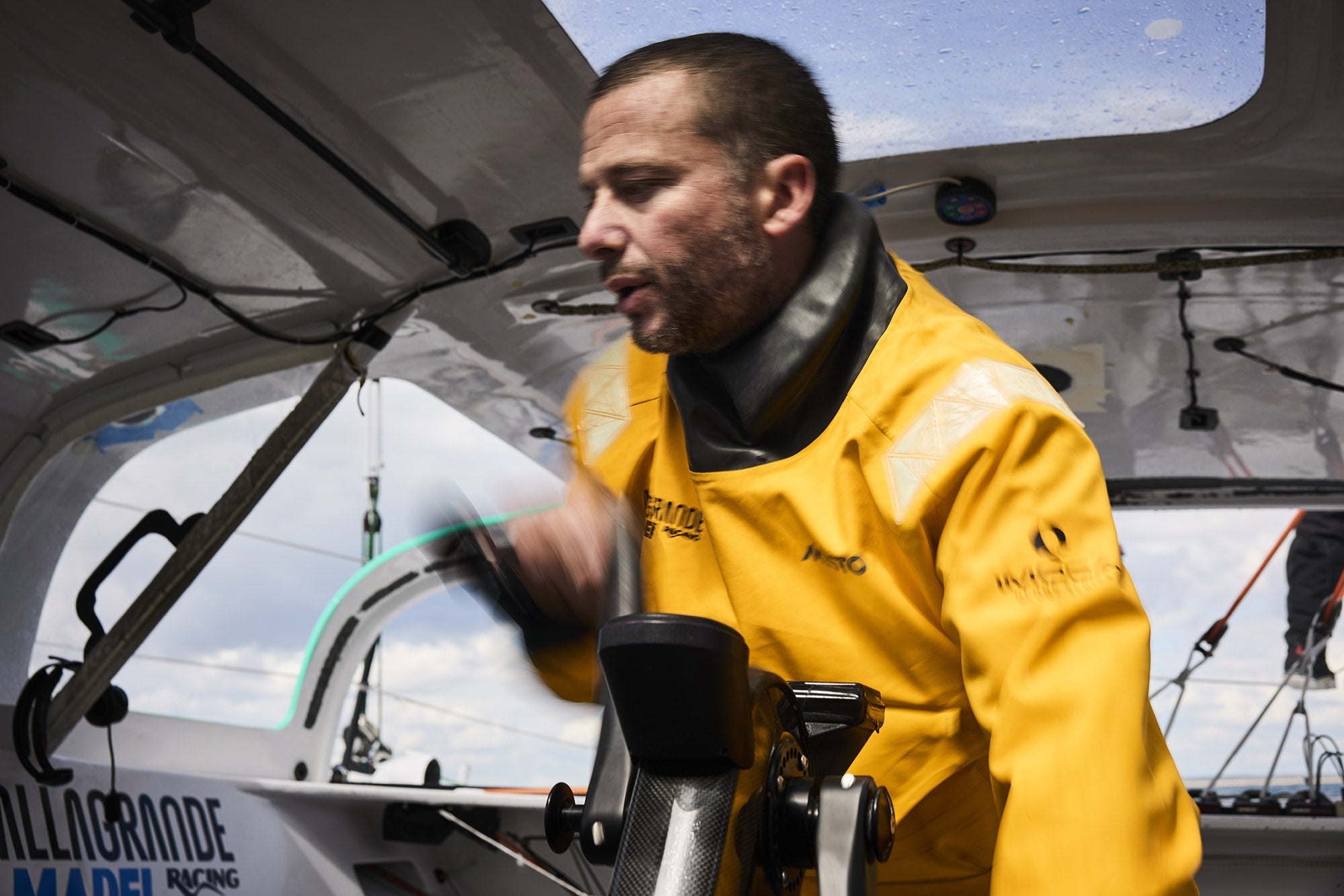
"A couple of hours ago I had a pretty serious electrical failure. I had to heave to and work on it for a good twenty minutes. A fuse board tripped and half the boat went dark. It wasn't a pleasant experience — I found myself in complete darkness on an IMOCA... you're in total blackout, and it does give you a bit of a fright. The boat isn't easy right now, it's quite unstable to sail. A bit as I remembered it. And life on board... well, there are 20 knots, it's not war. But it's already quite tough to live in — you have to be careful how you position your back, how you place your knees."
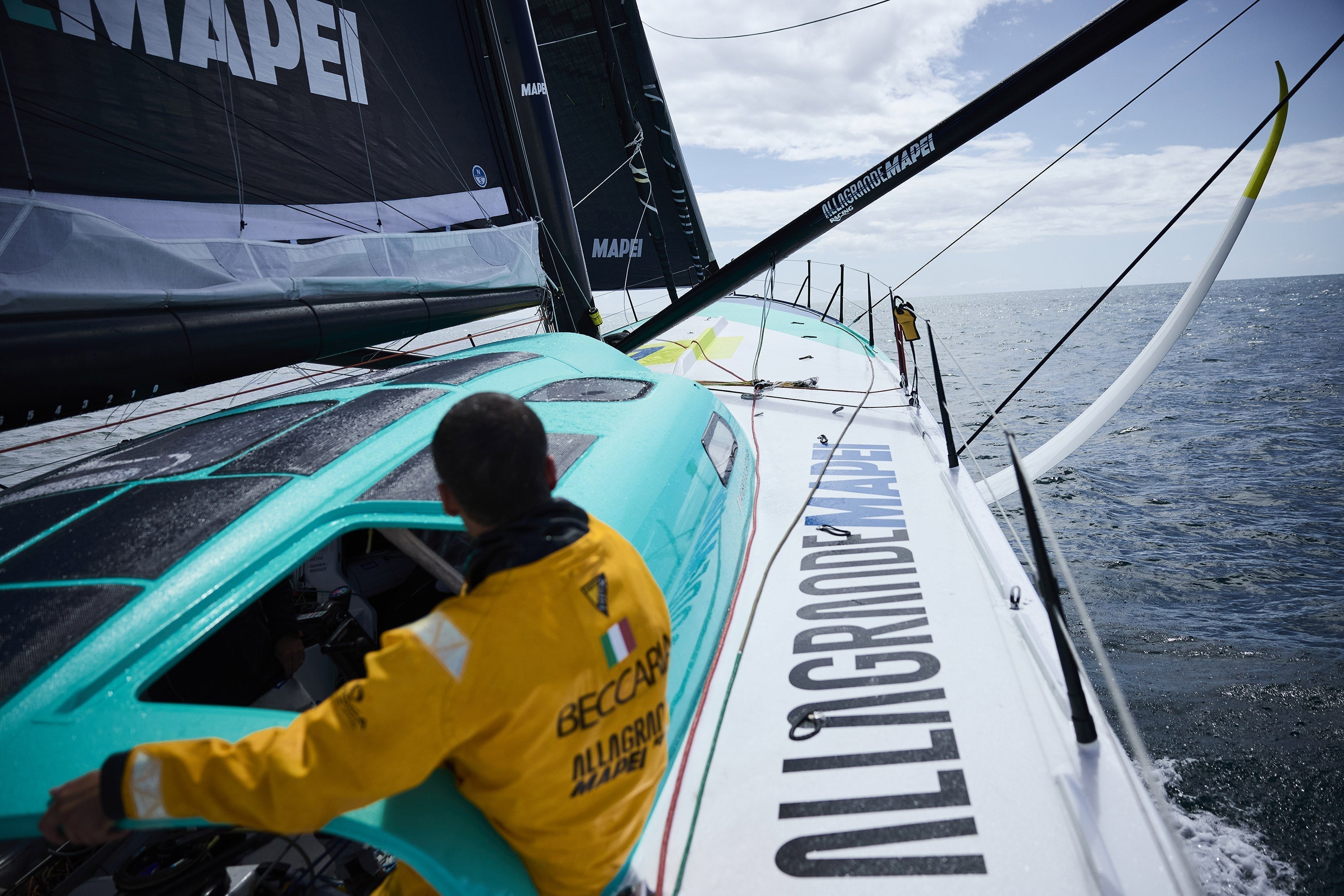
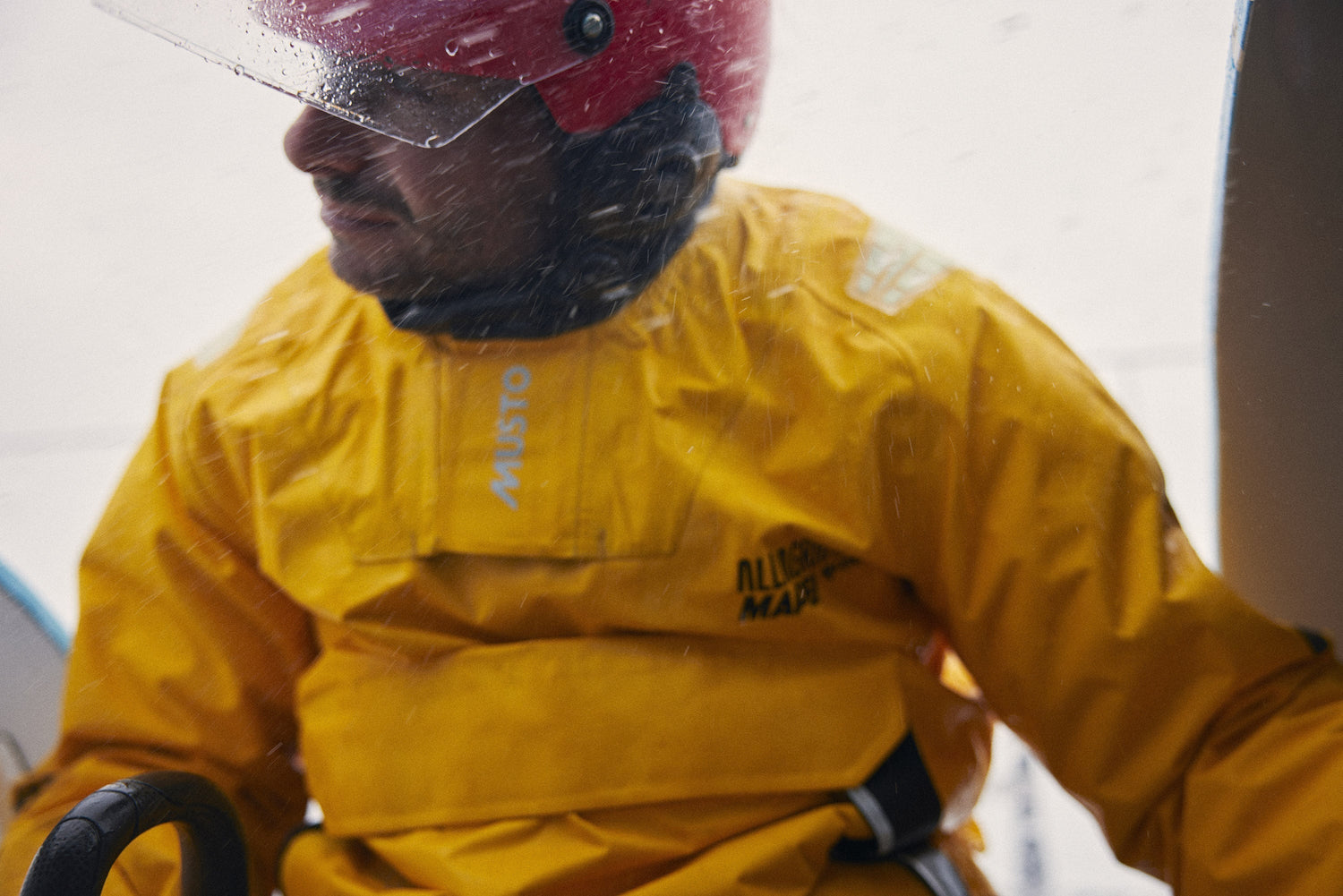
As the hours went by, conditions became increasingly demanding. The north-westerly wind kept building as the next front approached, accompanied by a foul current and a constantly growing sea state. Sailing on a broad reach towards the Irish coast, the fleet faced one of the toughest situations since the start: speeds held between 16 and 17 knots despite the strong breeze, constant impacts on the waves, and the pressure of the lee shore closing in. Ambrogio's night was tough: the squalls were less intense than forecast, but the autopilot gave some trouble by accidentally tacking the boat, and the configuration with the old foils makes it hard to compete upwind in terms of boatspeed due to the reduced lift generated.
"How do I handle the Fastnet passage, the south-west corner... well, with 4-metre waves and gusts over 30 knots, I'll try to stay well offshore. Because if I find myself close to the coast with even a small problem, it quickly becomes a very big problem. So I'll give myself some margin — I might lose a few miles, but I know that's not where the race is won. And I'll be calmer, I'll be able to bear away if something goes wrong or if I need to change a sail."
At this point only "MACIF" has managed to get through the hardest upwind section and is beginning to open up the angle along the western Irish coast, progressively entering the ideal conditions to express the boat's full potential. Ambrogio is following in fifth position, still in close contact with Francesca.
"First of all I hope I can sleep. Ahead of us there's a somewhat unsettled zone. So far I've had some naps, but I'm not sure I actually slept properly — or maybe I did, but I can't tell. So I'm hoping to grab a few naps between the squalls, keep an eye on them on the satellite charts, and sleep when it's calmer."
In the coming hours the fleet will face demanding conditions along the western Irish coast, but the most important decisions will come in the days ahead, when the sailors will have to choose how to cross the North Atlantic low pressure systems. Those choices could lead to very different strategies, marking a crucial phase of the race on the way back south.
Fleet tracker — 9 June 07:00